Scoped the way a senior PD lead prices a program — requirements maturity, mechanical scope, power architecture, market count, and the certifications your answers imply rather than the ones you'd guess. Honest ranges, 90 seconds, no call required.
1Stage 1 of 3 · Quick estimate
🔒Your idea stays confidential — answers are never used for training, NDA available before any call.
What are you building?
Where are you starting from? Requirements maturity is the #1 cost driver — bigger than any technology choice.
Electronics complexity Best guess is fine — this and mechanical scope move the number most.
Mechanical & motion
Display & interface
Power architecture
Firmware scope
Connectivity
Companion software
Target markets Each region is its own radio approval — compliance scope is derived, not asked.
Production ambition Decides whether DFM, tooling, and factory test fixtures exist at all.
2Stage 2 of 3 · Narrow the range
Narrow this range with the same questions a kickoff call would ask
These are the questions a kickoff call would ask. Each answer updates the estimate live and pre-briefs the engineer who'd write your Sprint report. Only the Sprint itself locks final numbers.
Private: stored only for your report prep and seen by your assigned engineer. NDA before any call — and no need to share the secret sauce in a web form.
Sensors on board Select all that apply.
Actuation
Operating environment
Battery-life target on one charge/cell
Size constraint
App platforms & cloud scope
Markets at launch Select all — certifications are priced per region.
Vertical compliance Select all that apply.
Target unit cost (COGS)
Launch deadline
What already exists Credits applied, subject to audit.
Budget allocated Doesn't change the math — helps us phase it honestly.
Primary users Shapes UX rigor, support load, and onboarding cost.
Must-have integrations Each one adds API, auth, and test surface.
Your product, in 1–3 sentences The most useful field on this page.
Closest existing product Even a rough analogue helps — "like X but for Y".
Biggest technical worry?
3Stage 3 of 3 · Full project brief
Generate your project brief
Answer 6 more questions and we’ll email you a written brief you can share with co-founders, investors, or any firm.
What triggered this project right now? The event or pain that put this on your desk.
How do users solve this today (workaround)? Spreadsheets, manual checks, a competitor's product…
Define "done" — what does success look like 12 months after launch? One metric is better than three.
What should this product NOT do? Out-of-scope is as valuable as scope.
Riskiest assumption — what would kill this if wrong? Tech, market, regulatory, supply chain…
Unfair advantage vs the next-best alternative? Why you'll win, not just ship.
Existing stack / tech preferences Optional — anything we must keep or avoid.
Private and NDA-covered before any call. The brief is yours to take to any firm.
DEVELOPMENT ESTIMATEIOT DEVICE
$29k – $47k
Estimated timeline: 7 – 11 months to production-ready
Complexity
MODERATE+
Confidence
±25%
Critical path
—
The range grew because the scope got real — this is the number other firms reveal in month three, not before you commit.
Engineering (NRE) figures only. Not included — the lines everyone forgets: mold tooling (at cost, $15–60k typ.) · certification lab fees (scoped above, at cost) · cellular data plans · cloud opex (~$200–600/mo at 5k devices) · app-store & platform accounts · sustaining engineering (~15–20%/yr post-launch). Unit cost (COGS) and tooling quotes are produced in the Feasibility Sprint.
Answer 12 quick scoping questions — sensors, environment, certifications, COGS target — and your range and timeline update live. The same questions a kickoff call would ask.
Cuts the range by up to 40%
Pre-briefs the engineer who'd write your Sprint report
Private — NDA before any call
3Stage 3 of 3 · Full project briefAnswer 6 more (3 min) — we email you a written briefA structured discovery brief you can share with co-founders, investors, or any other firm.⌄
What triggered this project right now? The event or pain that put this on your desk.
How do users solve this today (workaround)? Spreadsheets, manual checks, a competitor's product…
Define "done" — what does success look like 12 months after launch? One metric is better than three.
What should this product NOT do? Out-of-scope is as valuable as scope.
Riskiest assumption — what would kill this if wrong? Tech, market, regulatory, supply chain…
Unfair advantage vs the next-best alternative? Why you'll win, not just ship.
Existing stack / tech preferences Optional — anything we must keep or avoid.
Private and NDA-covered before any call. The brief is yours to take to any firm — we send a clean PDF-ready summary, not a sales pitch.
✓ Brief sent to your inbox. Your assigned engineer reviews it before the kickoff call.
Your range and timeline above are free and uncapped. Email only unlocks the detailed PDF, assumptions, and exclusions doc.
Assumptions baked into this number
EE design, firmware, enclosure/DFM, certification (FCC/CE per markets selected) and pilot run all in scope
Standard 2.4 GHz radios only — assumes no custom RF / antenna design
Off-the-shelf cells; no custom battery pack qualification (UN 38.3 lab fees at cost)
One mechanical revision between EVT and DVT; tooling quoted at cost separately
Explicitly excluded
Medical / IEC 62304 / FDA 510(k) programs
ATEX / Ex / automotive PPAP qualification
Mold tooling, certification lab fees, carrier data plans, cloud opex
Sustaining engineering post-launch (~15–20%/yr)
Anything excluded above is a candidate Sprint deliverable — the Sprint exists to eliminate these unknowns for your specific build.
Why your range looks wide — and that's the honest answer
Estimate confidence classes, in plain English
Every cost firm — aerospace, construction, hardware — works to the same scale. AACE Class 5 → Class 1. Most calculators on the internet quietly show you a Class 5 number with Class 1 confidence. Here's what you'd actually get from each stage, and where this tool sits.
CLASS 5−50% / +100%
Concept stage. What you have: an idea, no spec. Anyone quoting tighter than this off a napkin is guessing or lying. ← every "free instant quote" tool
CLASS 4−30% / +50%
This calculator (Stage 1–2). Driven by 10–22 structured inputs, not a guess. We earn the narrower band only because the inputs are real.
CLASS 3±15%
After Feasibility Sprint. Architecture chosen, BOM costed, risks named. The number a board or investor can plan against.
CLASS 1–2±5–10%
After EVT. Real boards built, real parts sourced. Only honest path to single-digit precision is real engineering hours behind it.
Industry standard: AACE International Recommended Practice 18R-97. If anyone shows you a Class 1 number from a 60-second form, ask which side they plan to be off on. We'd rather show the band honestly and narrow it stage-by-stage with you.
Estimated vs actual · the receipts
Our last 12 Sprint estimates landed within ±11% of final invoice
Every cost calculator on the internet shows a number. Almost none show what happened after. Here are three recent builds, with the Sprint quote and what the project actually cost — including the variance and what drove it.
Case 01 · Cellular asset tracker
Sprint estimate$78k – $94k
Actual invoiced (NRE)$91k
Variance vs midpoint+5.8%
Came in within the quoted band. Driver: one extra DVT spin after EMC pre-scan flagged a harmonic — flagged in the original risk register.
Case 02 · Wearable health sensor
Sprint estimate$135k – $165k
Actual invoiced (NRE)$148k
Variance vs midpoint−1.3%
Inside the band, near midpoint. Optical sensor selection changed mid-EVT; scope offset by descoping a second connectivity radio per client decision.
Case 03 · Industrial controller (IP66)
Sprint estimate$62k – $80k
Actual invoiced (NRE)$88k
Variance vs midpoint+24%
Over band. Client added a second SKU mid-DVT (not in original scope); honest variance reported, not hidden as "discoveries". Re-quoted in writing first.
Methodology: variance measured against the midpoint of the Sprint-quoted range, rolling 12-month sample, NRE only (tooling and certification at cost). Cases pre-cleared with each client; full anonymized dataset available on request under NDA. We publish the misses too — case 03 is a 24% miss, and it stays on the page.
The first step
Feasibility Sprint — your product, de-risked in 5 days
The calculator gives you a range. The Sprint gives you your numbers — architecture, BOM, budget, and risks for your specific product, from engineers who will actually build it.
Idea-to-Reality Feasibility Sprint
$495100% CREDITED TO YOUR PROJECT
Technical architecture document— system block diagram, key components, build-vs-buy calls, written in engineer-grade detail.
BOM-level unit-cost estimate— line-item bill of materials at your target volume, with sourcing notes and 2nd-source candidates.
Phase-by-phase roadmap & budget— proto → EVT → DVT → PVT, realistic costs and dates, with the assumptions written down.
Top-5 risk register— the things most likely to kill your timeline, with mitigation owners and trigger conditions.
Engineering spec you can take to any vendor— vendor-neutral, no idea8 lock-in. Send it out for competing bids if you want. We expect you to.
45-minute readout call— walk the findings with the engineering lead who wrote it, not a salesperson.
Three ways the risk is on us, not you: (1) $495 credits 1:1 against your build — if you hire idea8 for the build inside 90 days, the Sprint fee is deducted from invoice one. No commitment required to claim it. (2) Money-back — if the readout doesn't give you at least three decisions you couldn't make before, we refund the $495 in full, no argument. (3) Keep-it-either-way — every artifact above is yours, vendor-neutral, to take to any firm. Most clients stay; the ones who don't, we still helped. Clarity is the product.
What $495 actually buys: ~14 senior engineering hours. The same paid-discovery study runs $5,000–$15,000 at a US or EU firm — our cost structure is the arbitrage, not the report depth. Don't take our word for it: download a sample report and judge the depth yourself.
Regulated or unusually complex device? Ask about the $1,500 Deep Feasibility on the call. Delivery in 5 business days from kickoff. After payment you'll receive the kickoff-booking link and NDA by email within minutes. Refund policy.
Why is it paid — and why so cheap?
Paid, because free consultations attract everyone and your project deserves an engineer's full attention, not a sales script. Cheap, because Colombo engineering costs a fraction of San Francisco's: you get ~14 senior hours that would bill $5–15k at a US firm. The price is geography, not corner-cutting — the sample report is the evidence.
You get a deliverable, not a pitch
A 10–15 page report you can put in front of your co-founder, your board, or your investors. Most clients use it to unlock their next funding conversation.
The lowest-risk way to test us
Before you commit a five- or six-figure build to any firm, watch how they think for $495. Our process, communication, and engineering judgment — on display in week one.
Where we work, and why it's an advantage
Yes — we're a Colombo, Sri Lanka engineering studio. Here's why that's the deal, not the catch.
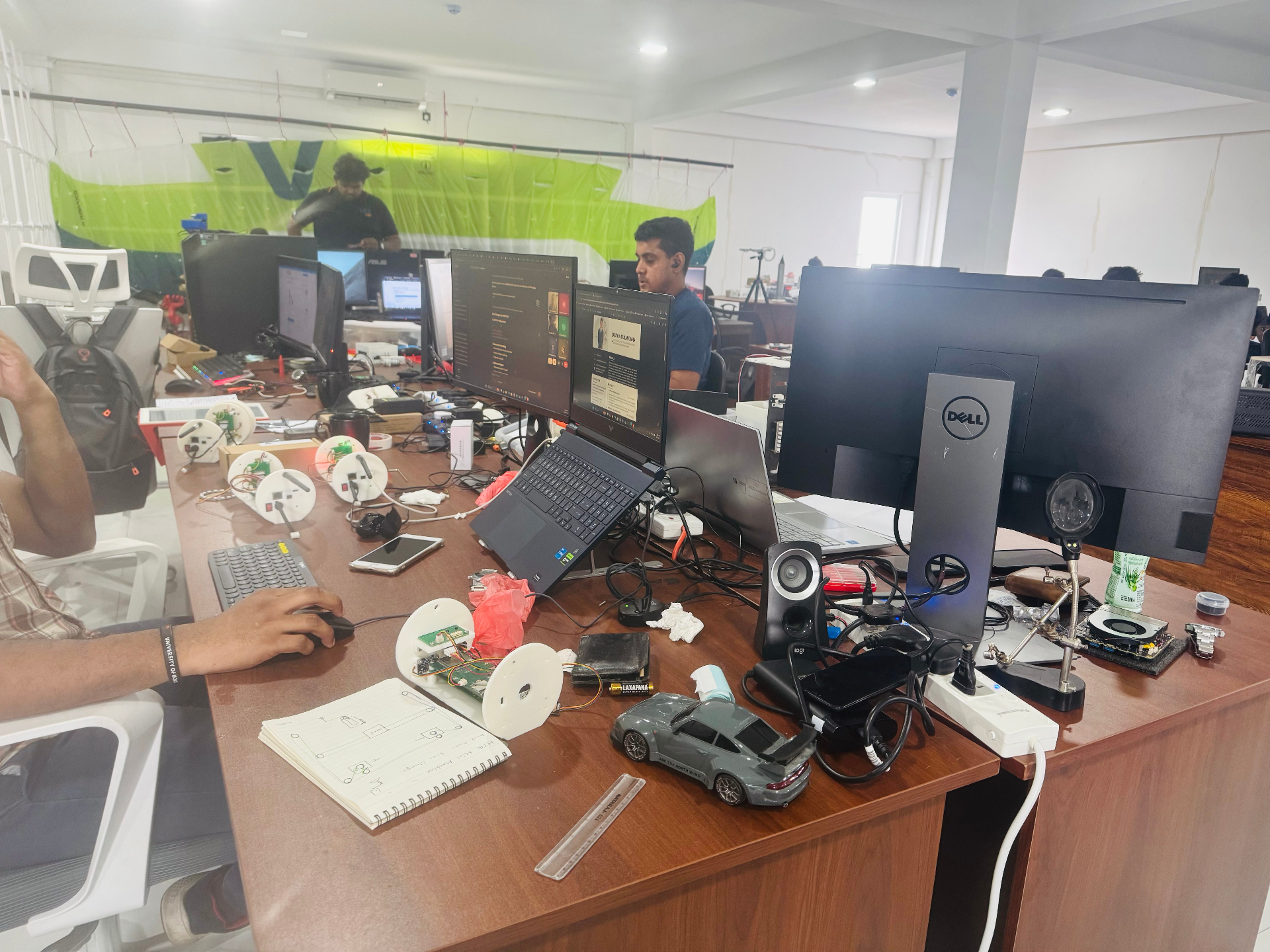
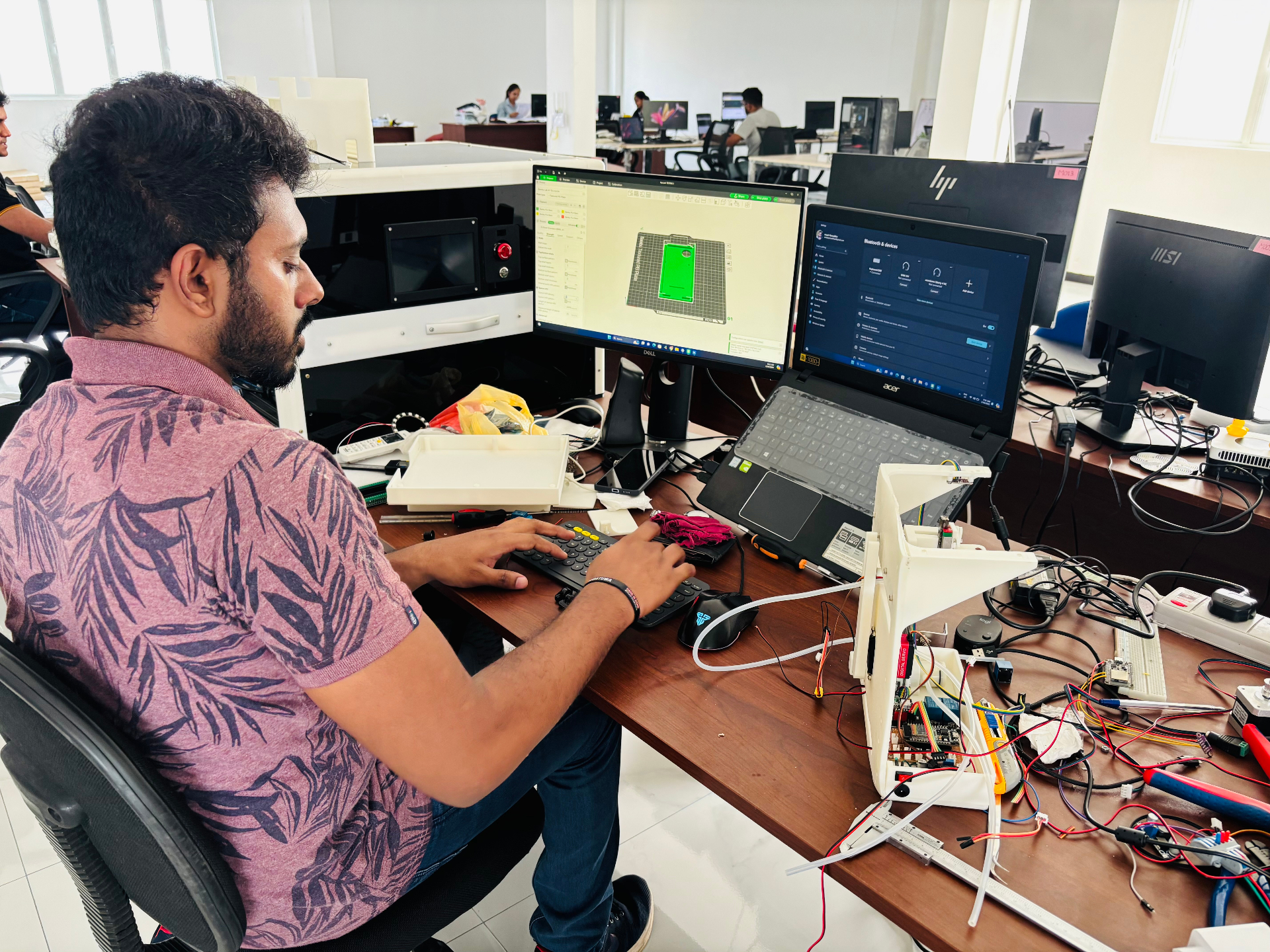
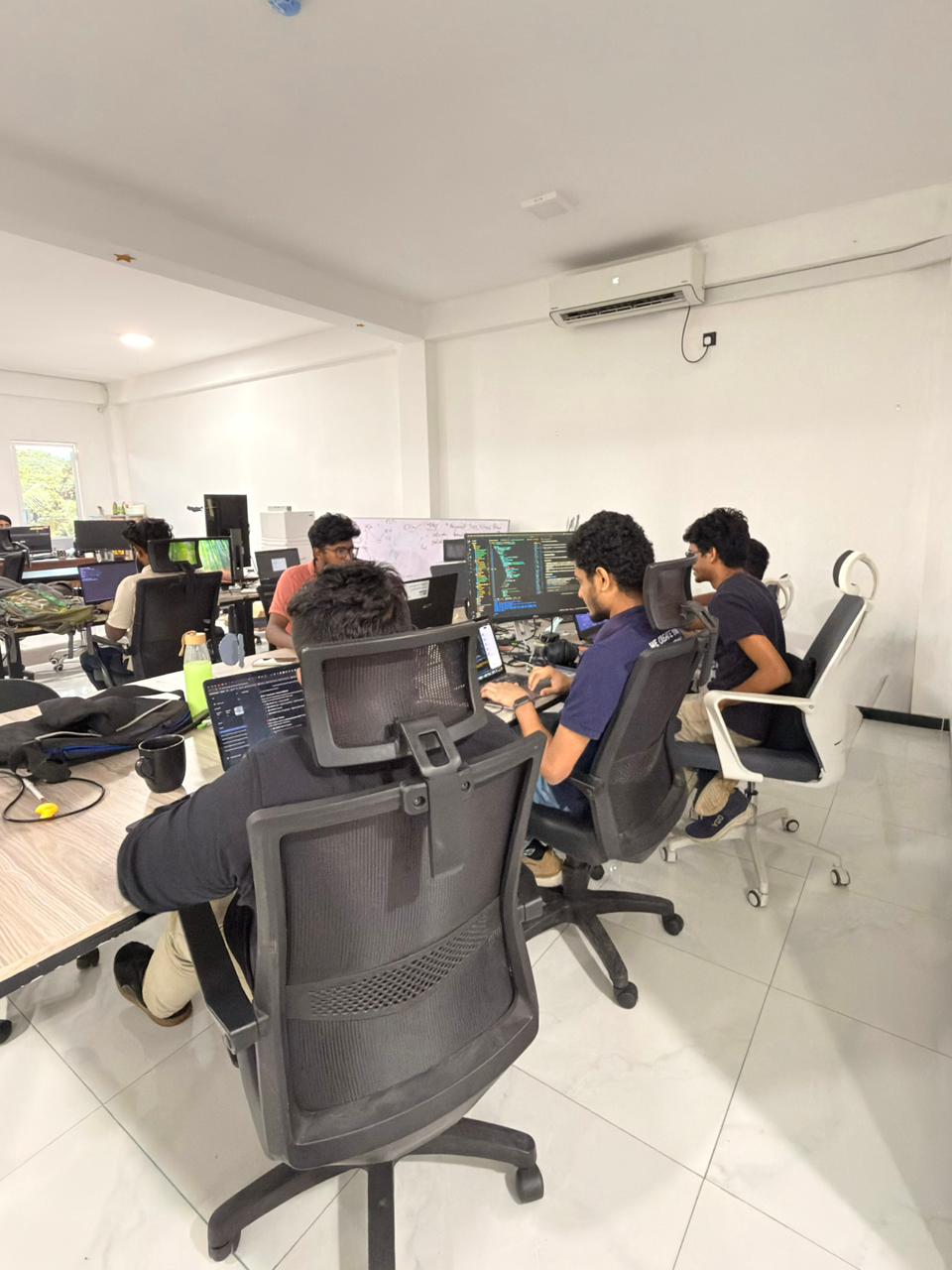
You'd find this in one Google search. We'd rather lead with it. Senior hardware engineers in Colombo cost a fraction of San Francisco or Berlin rates — that gap is the entire reason a $495 Sprint exists. The work doesn't change; the postal code does.
Timezone overlap
UTC+5:30 — 4 working hours/day with EU, 2.5 with US East (morning calls, evening for us). Async-first by design; daily written updates, not midnight Zooms.
Cost structure
Senior embedded engineers bill ~$45–70/hr here vs $180–300 in the US. That's geography arbitrage — same engineer caliber, different cost base. No subcontracting to a cheaper third party.
Named team, no relay
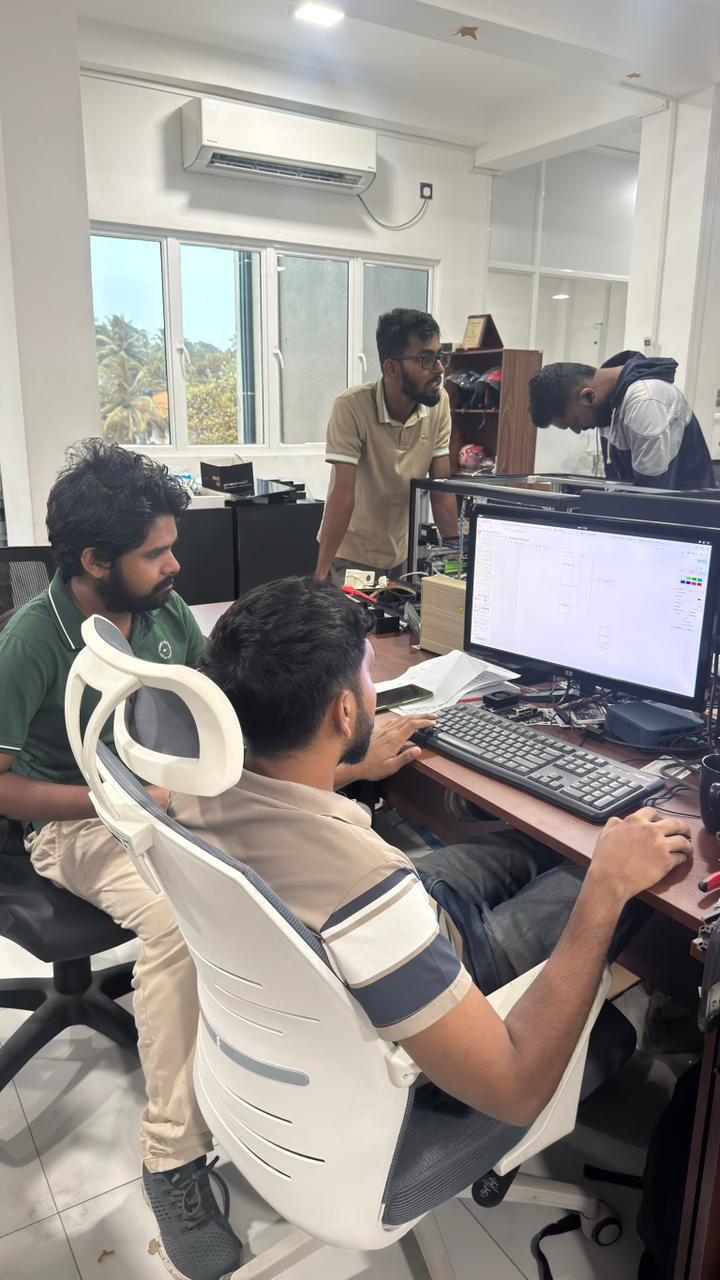
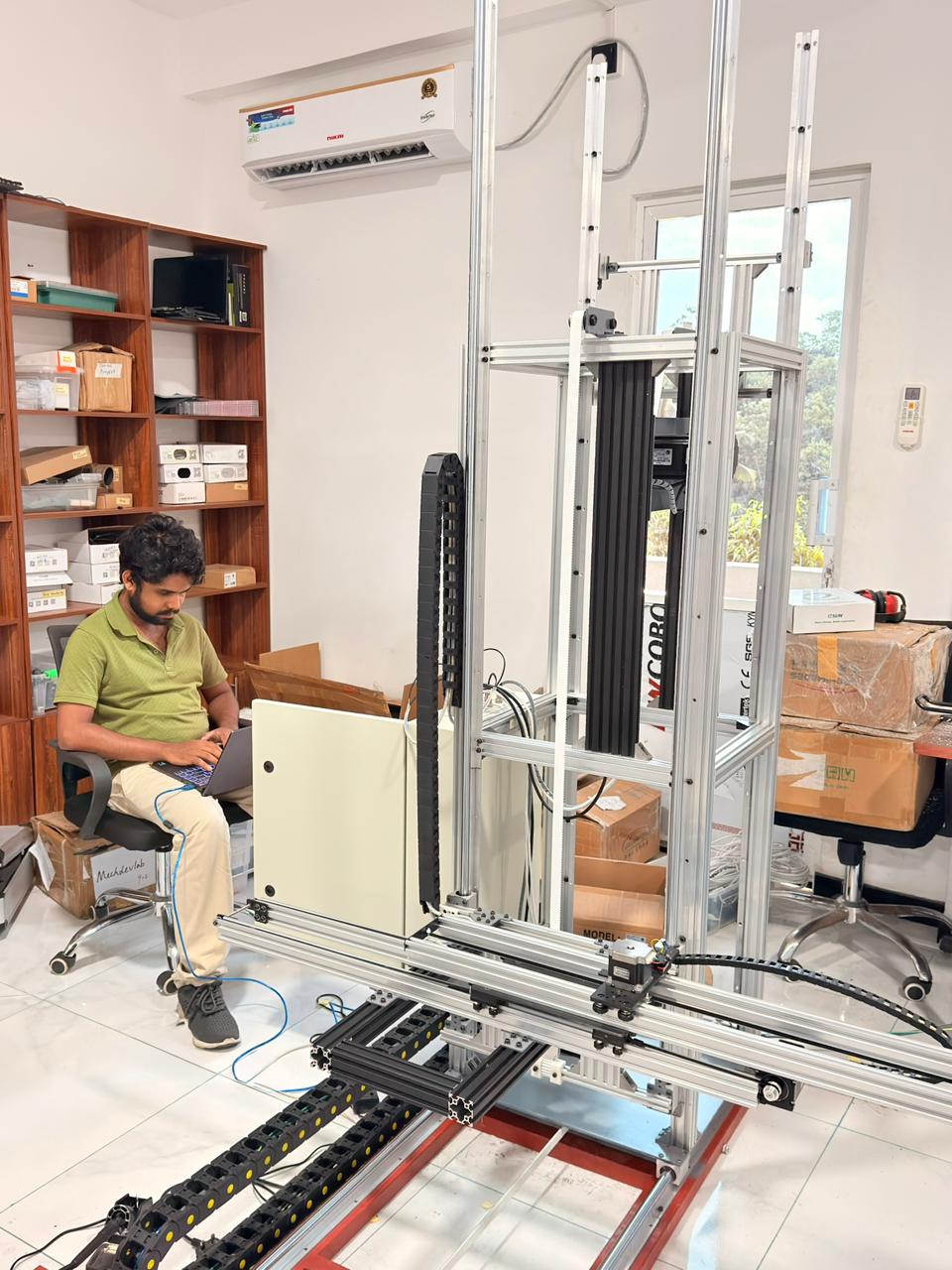
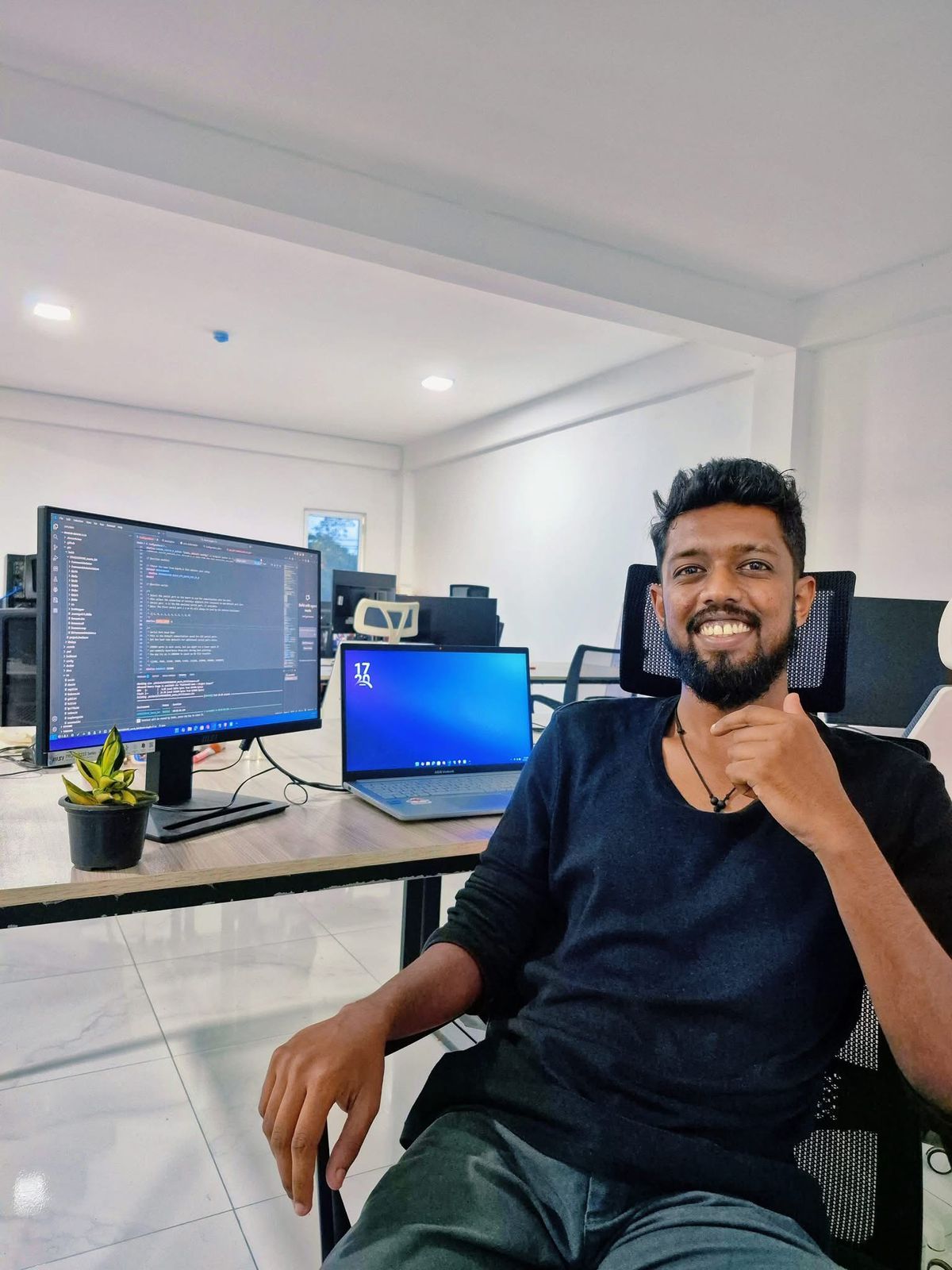
The engineer who writes your Sprint report is the engineer who builds your product. No sold-by-seniors / built-by-juniors bait-and-switch. Photos and LinkedIns up top.
Communication cadence
Daily Slack/Notion updates · weekly engineer-led video · all decisions written. You'll never wonder what happened this week. Contract names a single point of contact, not "the team".
IP & contracts
Mutual NDA before any call. Delaware / UK contracting entity available; all IP assigned to you on payment. Source files, schematics, gerbers — yours. No "we keep the firmware library" clauses.
Hardware sourcing
Direct Shenzhen relationships for tooling, PCBA, and assembly; samples shipped to your office wherever you are. No timezone tax on parts.
Payment exposure
Milestone-gated billing in USD via Stripe or Wise — invoiced from the Delaware/UK entity if you prefer. You pay when a deliverable lands, never ahead of it. Your maximum exposure is one milestone, not the project. The $495 Sprint is the largest leap of faith we'll ever ask you to take.
Continuity & handoff
Repos, CAD, and docs live in your GitHub, your cloud, your Notion from day one — not exported at the end as a favor. Handoff-ready documentation is a deliverable, not a courtesy. If we vanished tomorrow, you'd lose a vendor — not your product.
If timezone or jurisdiction is a hard no for you, we'll say so on the fit call — better to know in week one than month six.
How an engagement runs
From sprint to shipped, in phases you approve one at a time
01 — WEEK 1
Feasibility Sprint
Architecture, BOM, budget, risks. You decide with real numbers on the table.
02 — MONTHS 1–3
Prototype
Working proof: custom PCB, firmware bring-up, core function demonstrated end-to-end.
03 — MONTHS 3–8
EVT / DVT
Engineering and design validation — test, iterate, certify. Weekly demos, no black box.
04 — TO PRODUCTION
PVT & handoff
DFM, tooling support, factory bring-up. Your IP, your design files, your supplier relationships.
From the studio
Concept & engineering design work
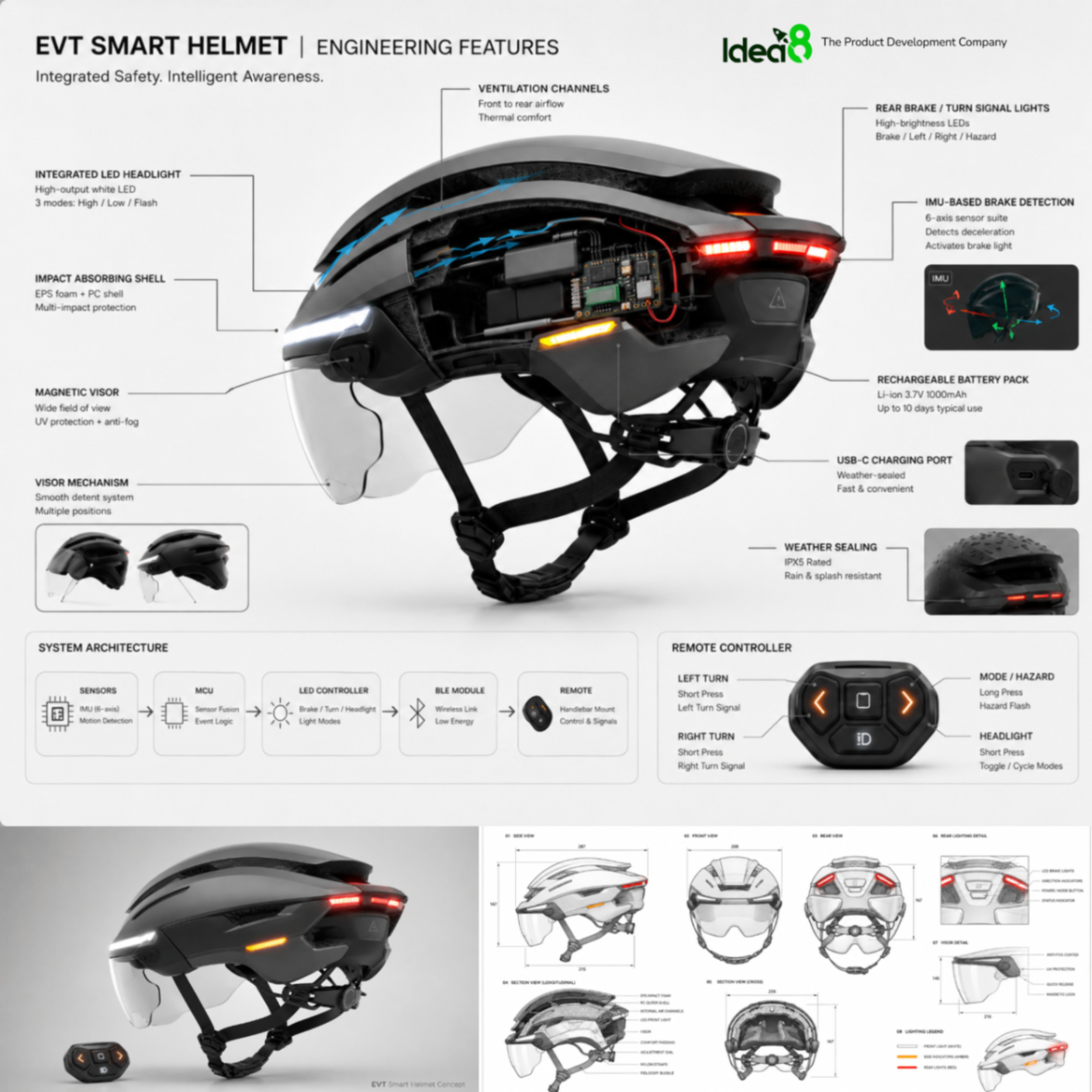
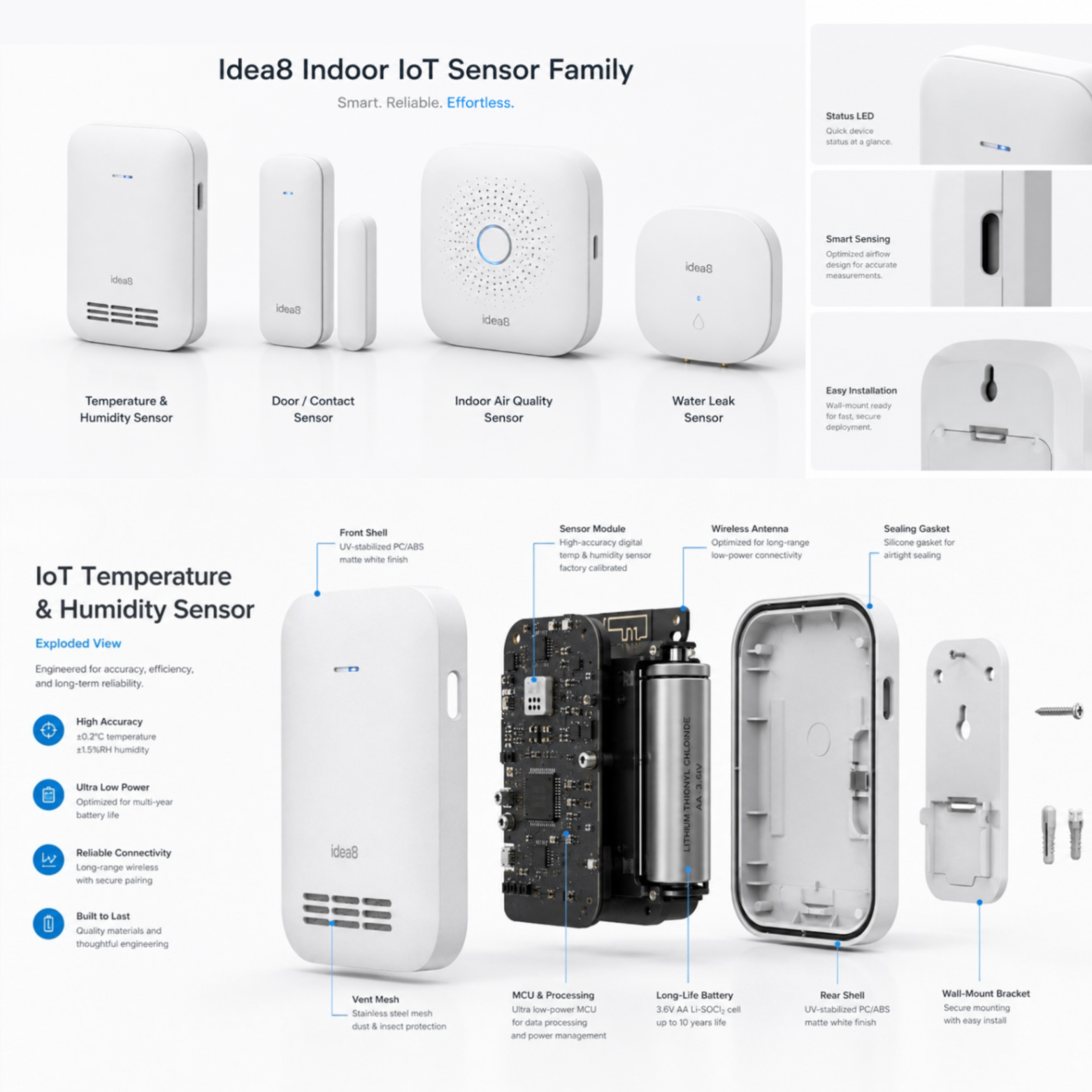
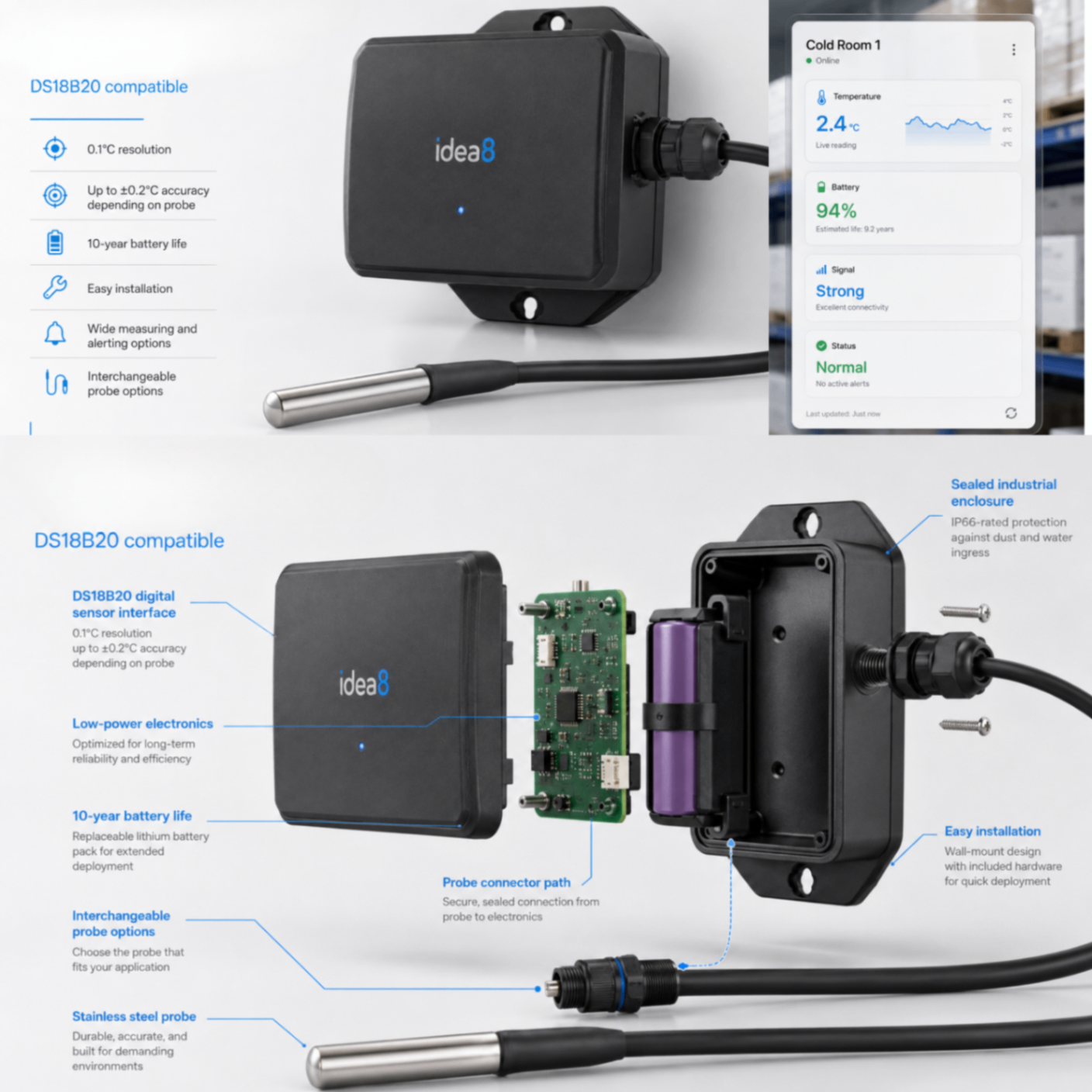
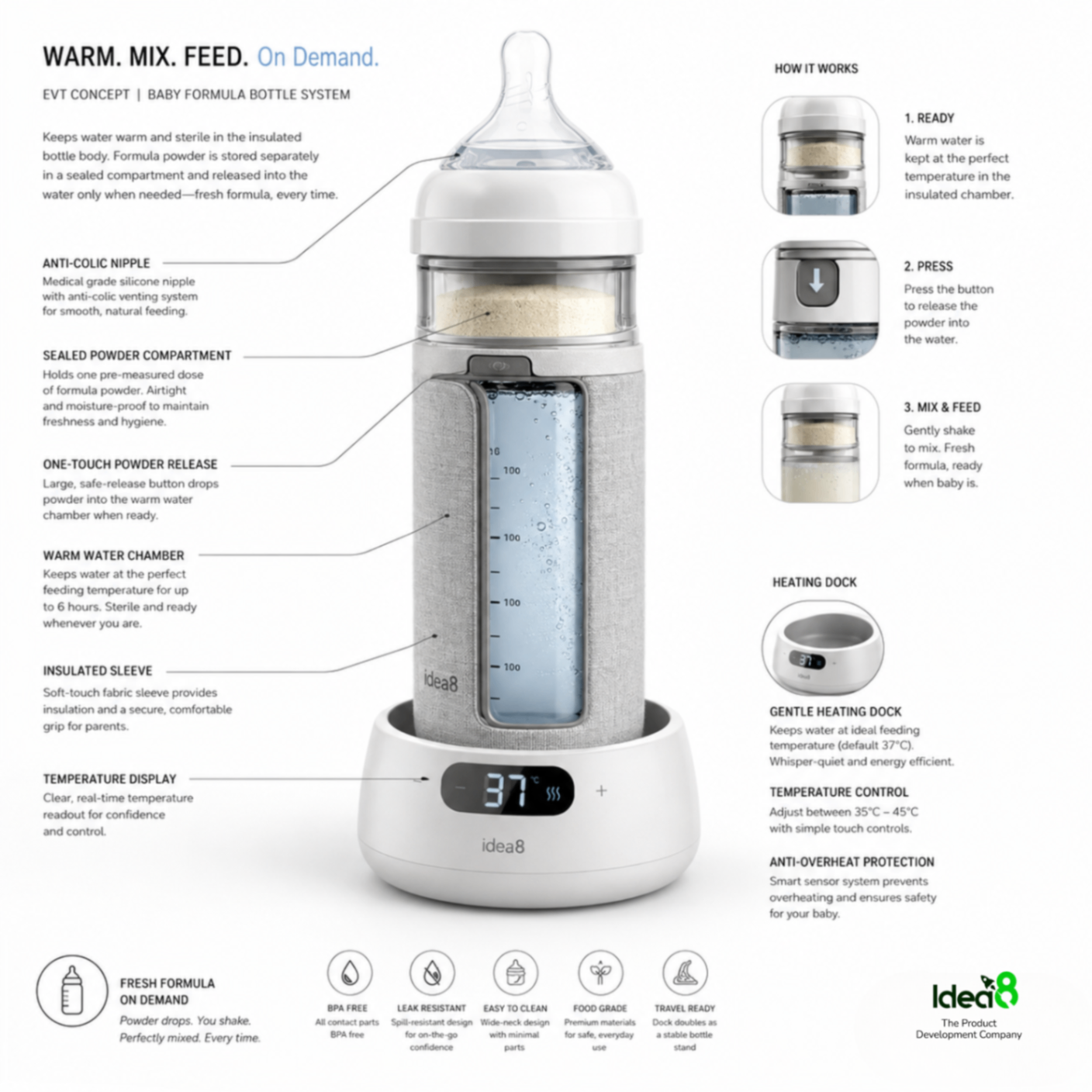
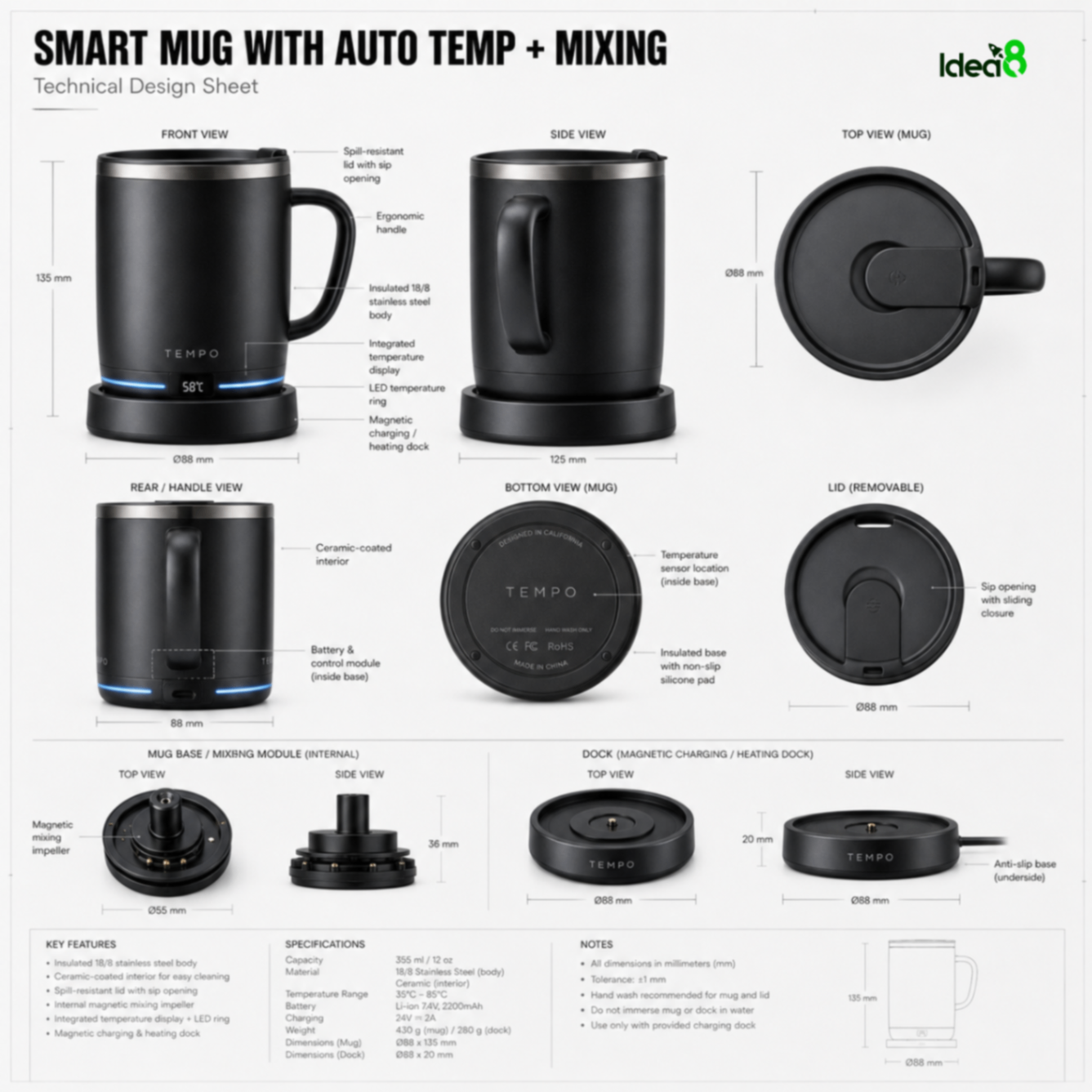
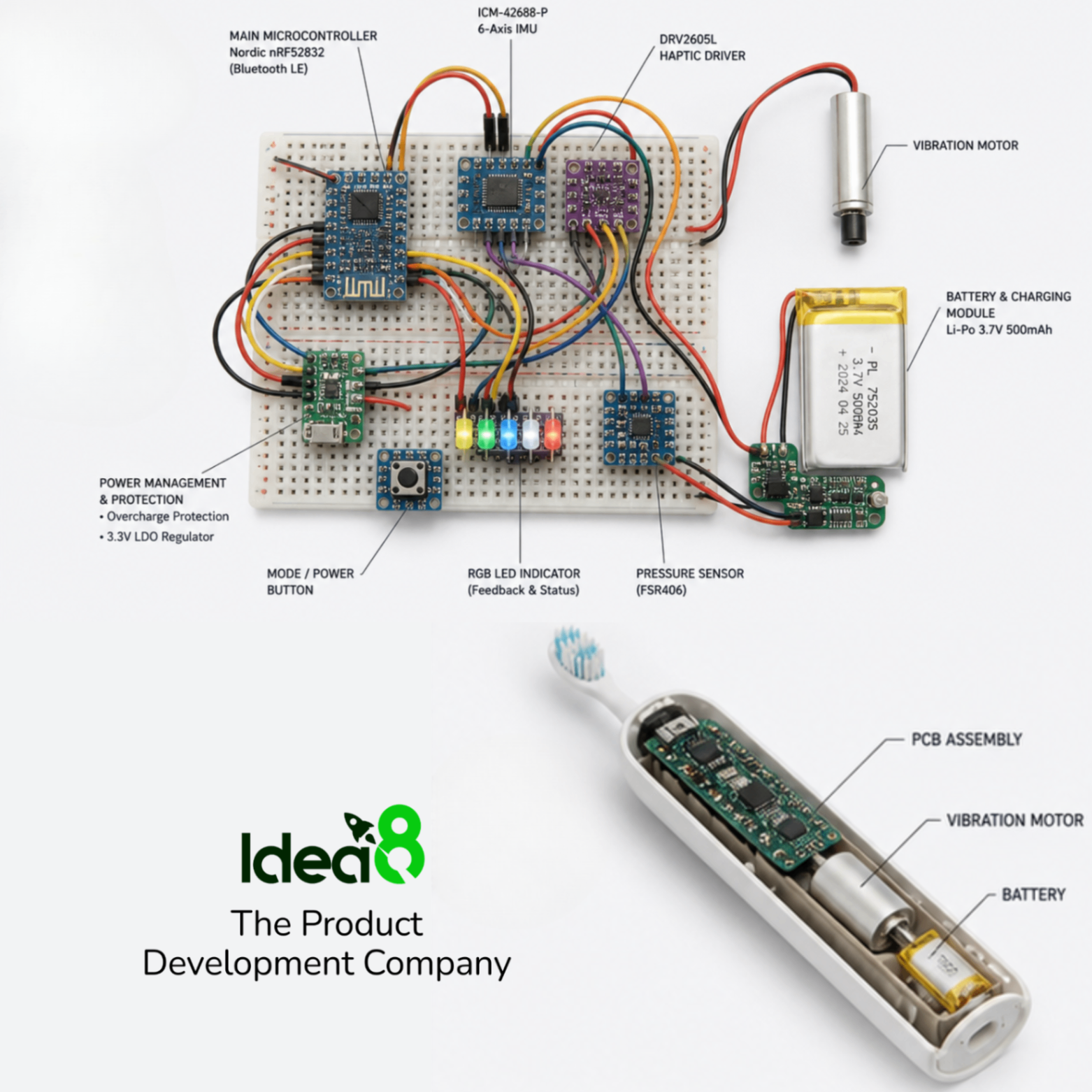
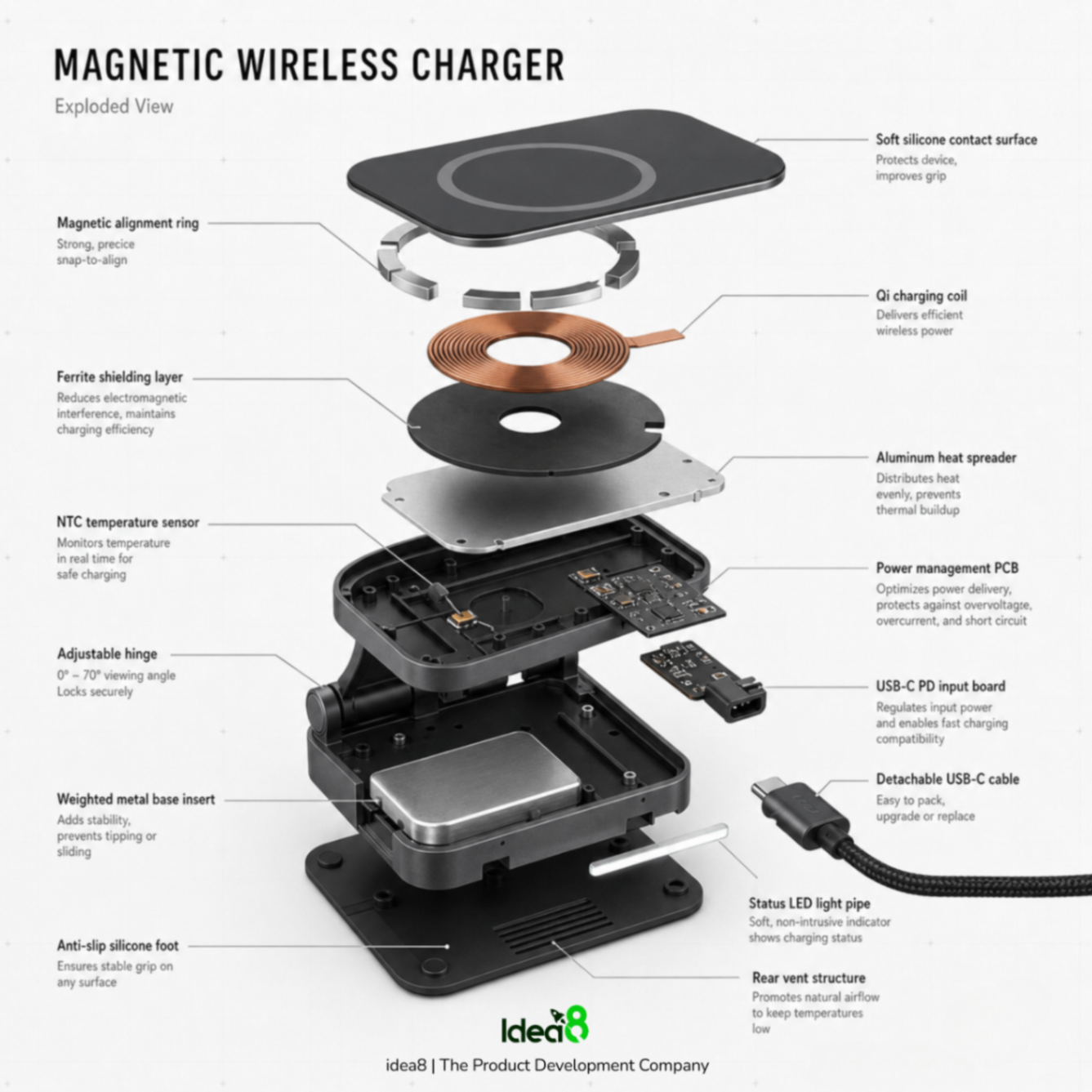
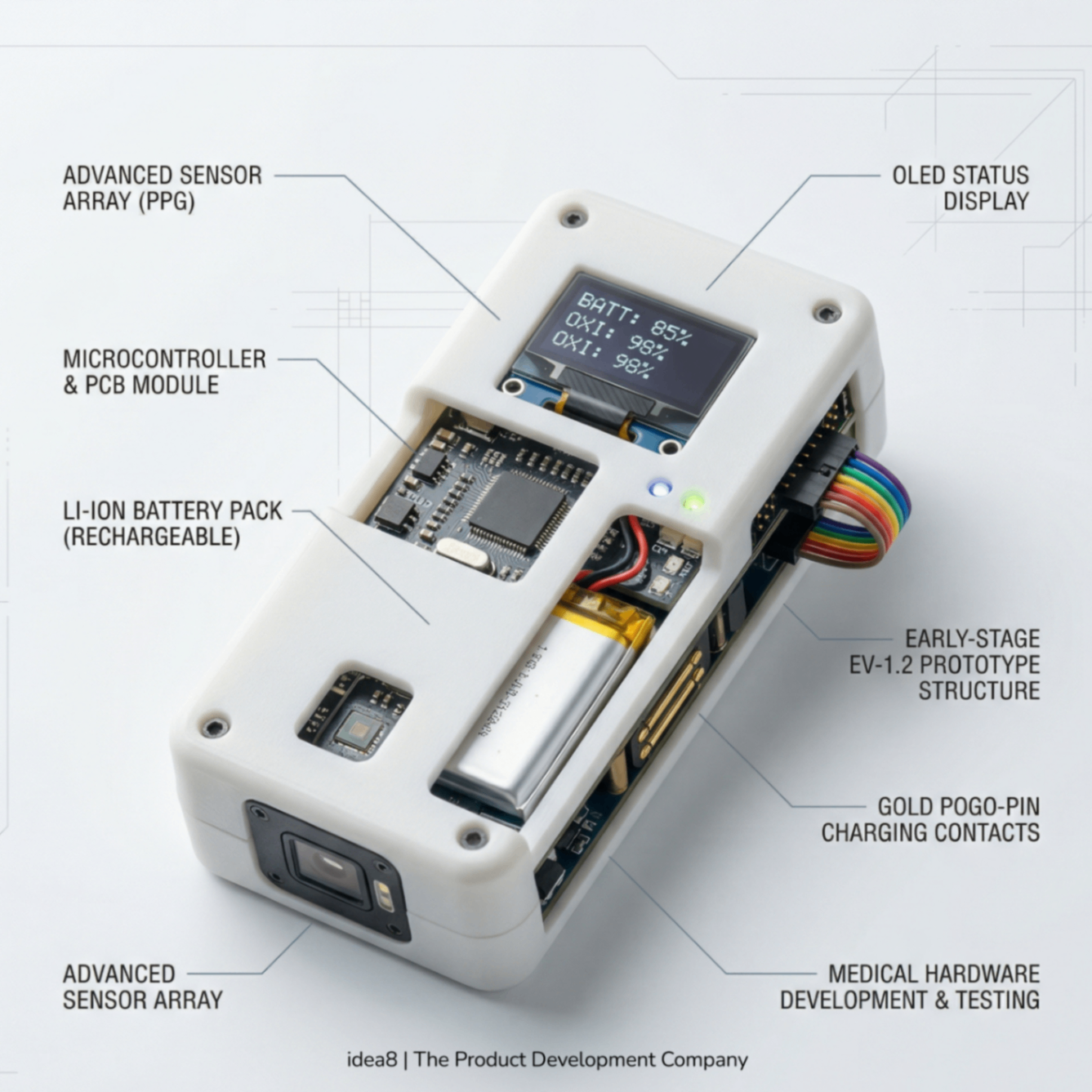
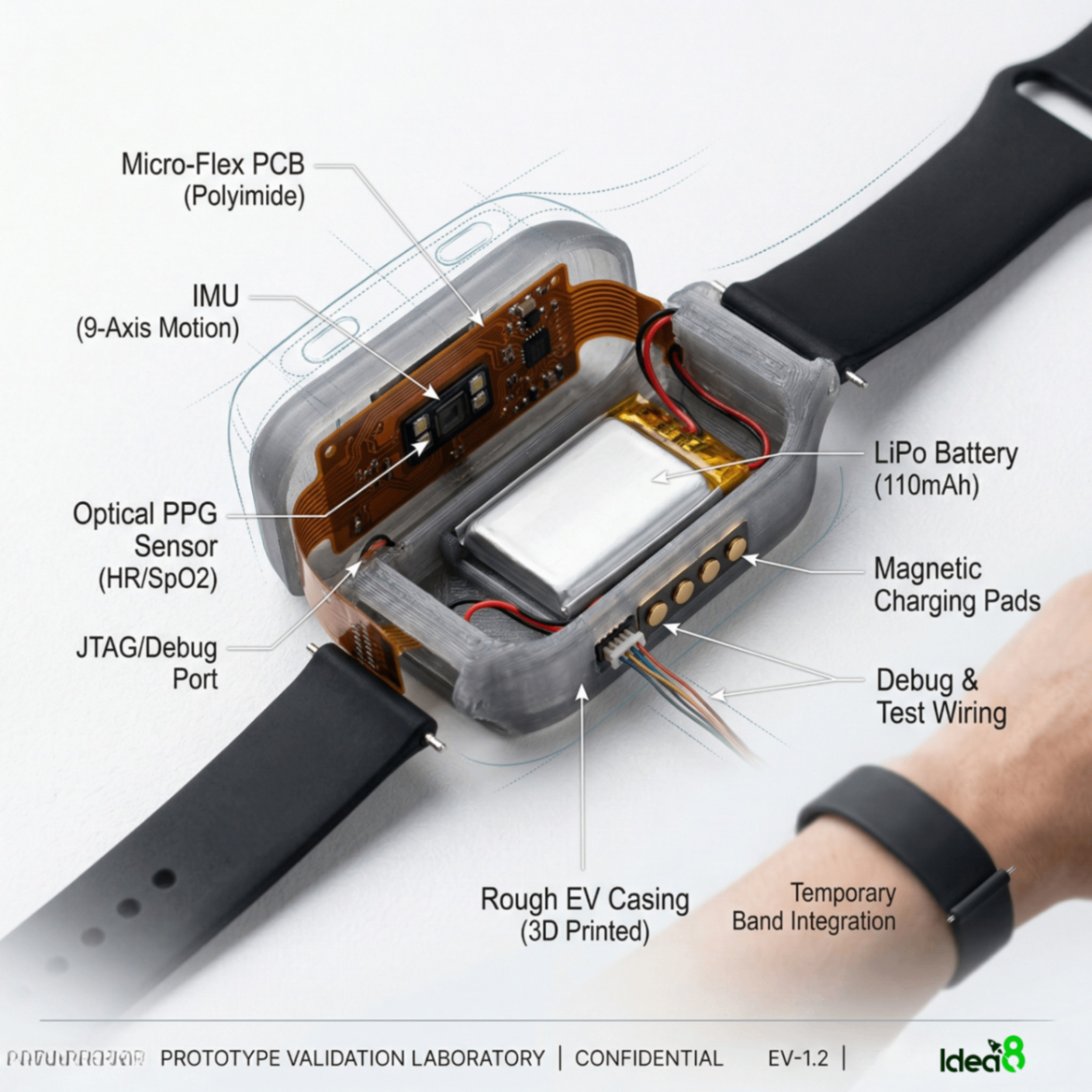
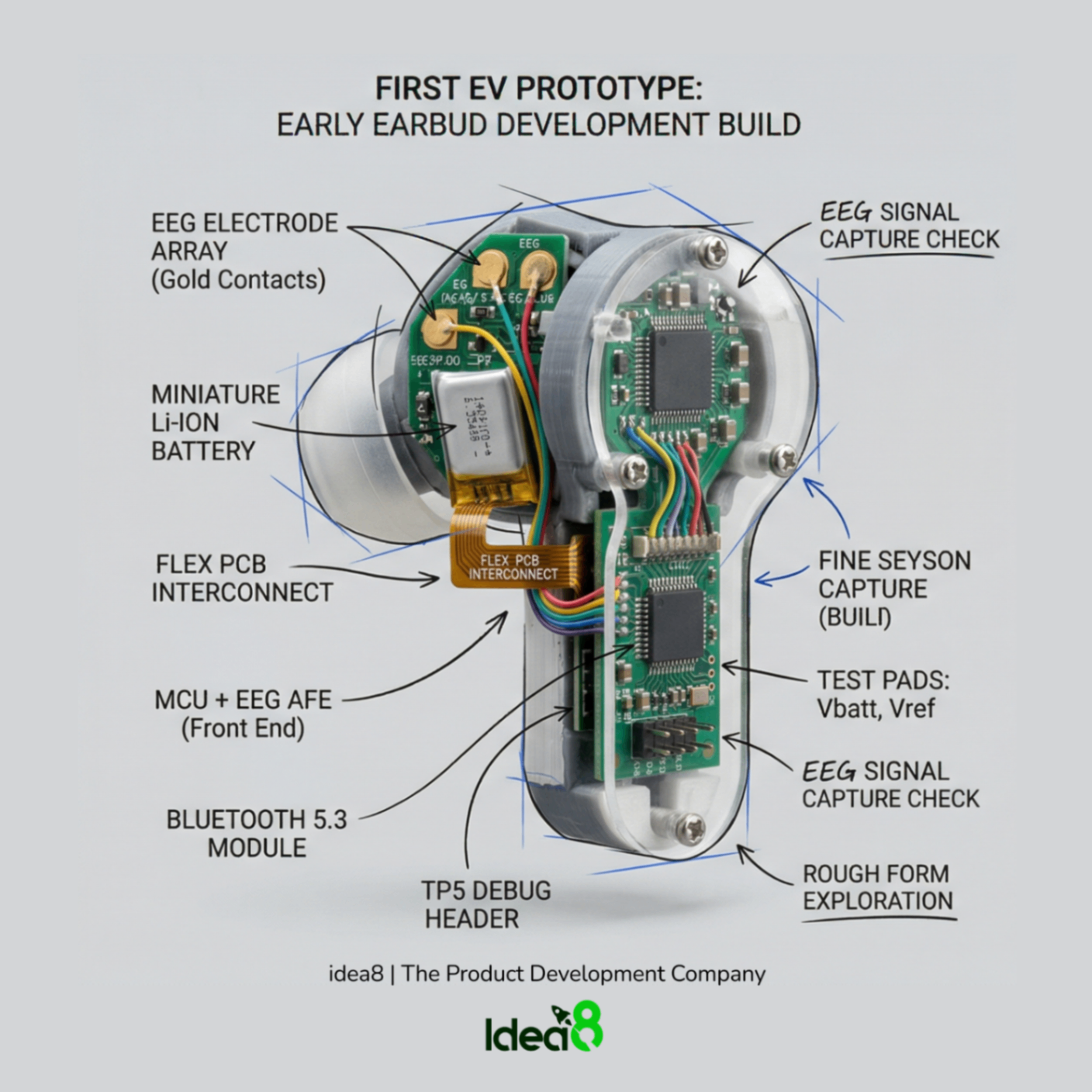
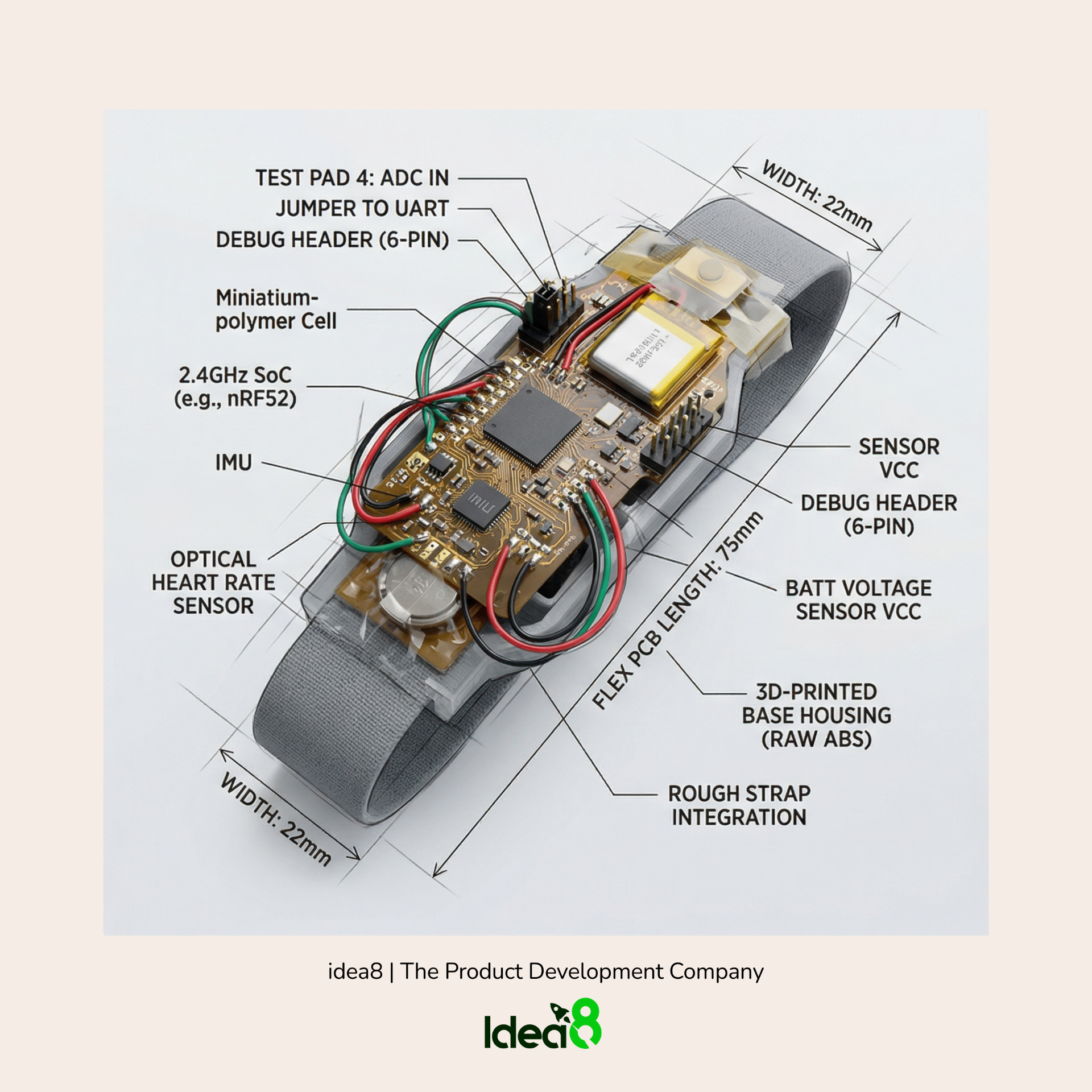
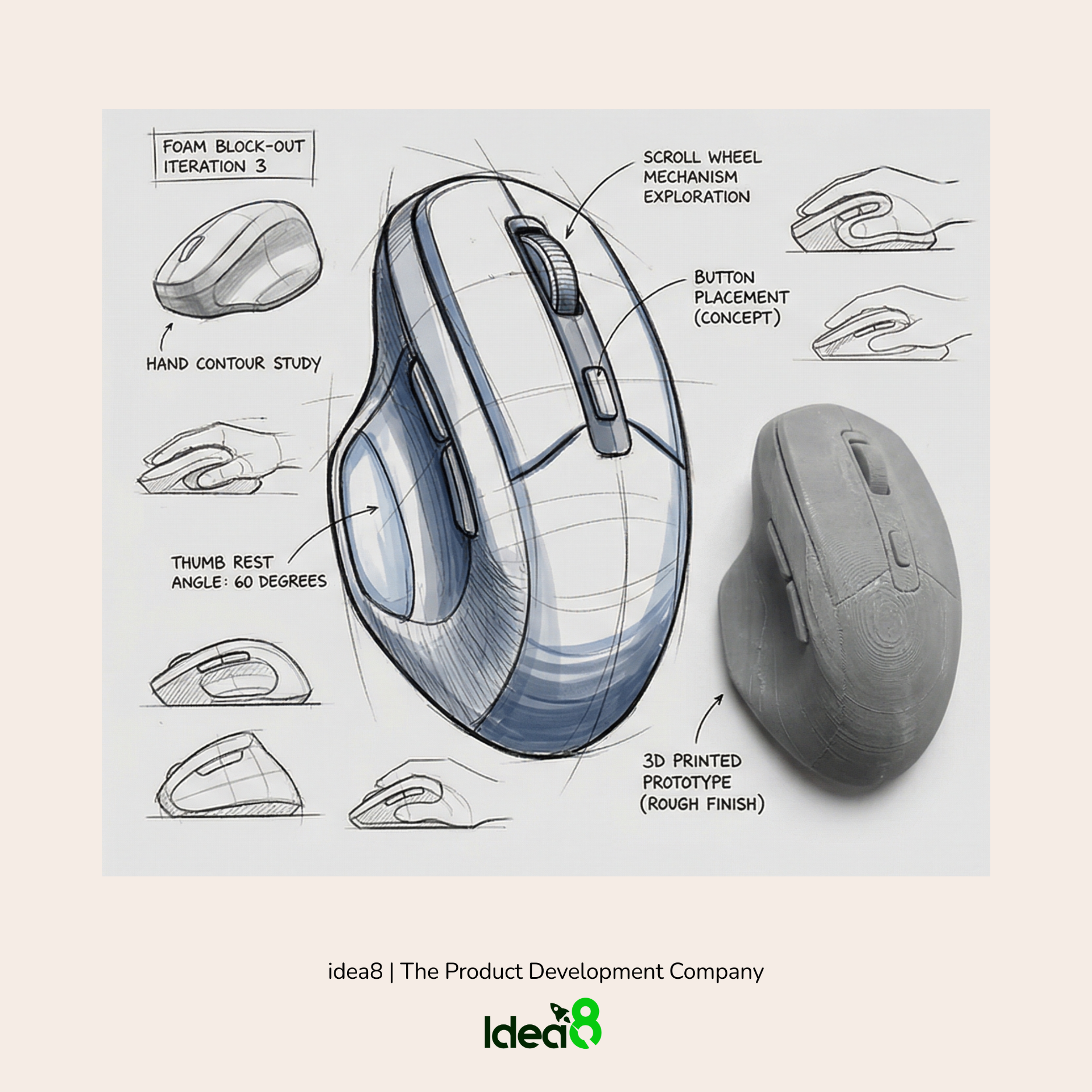
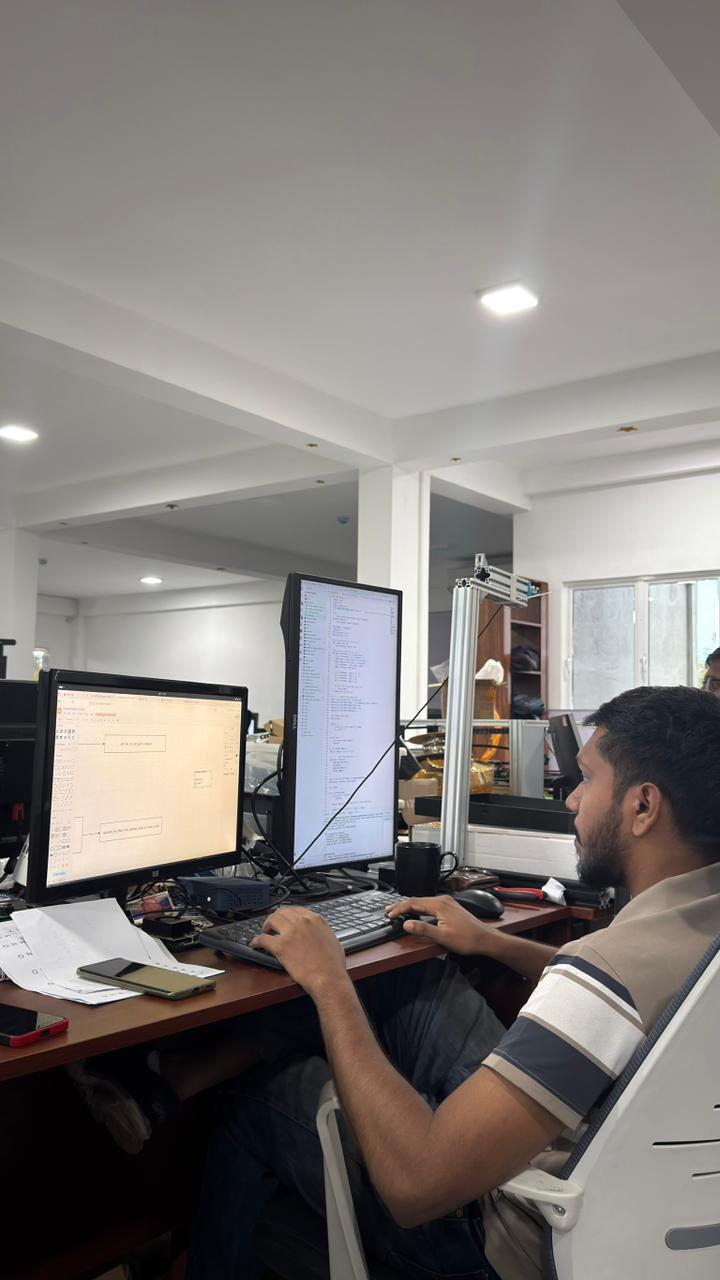
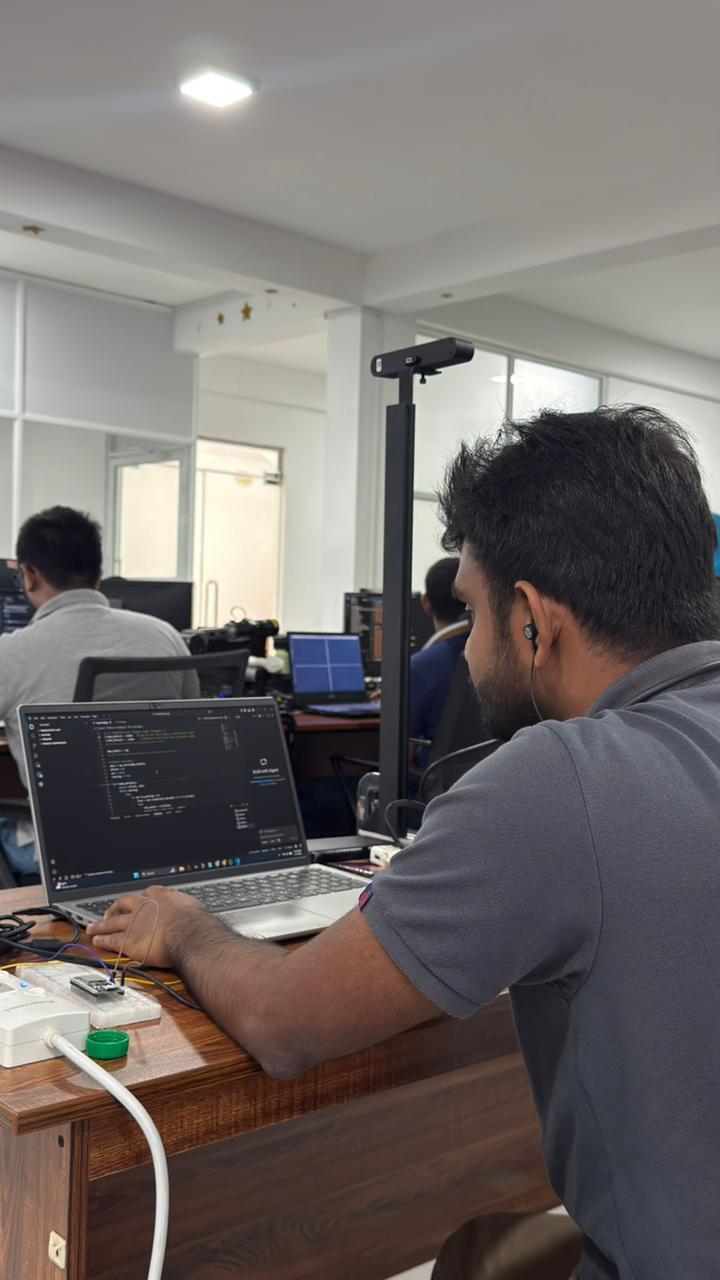
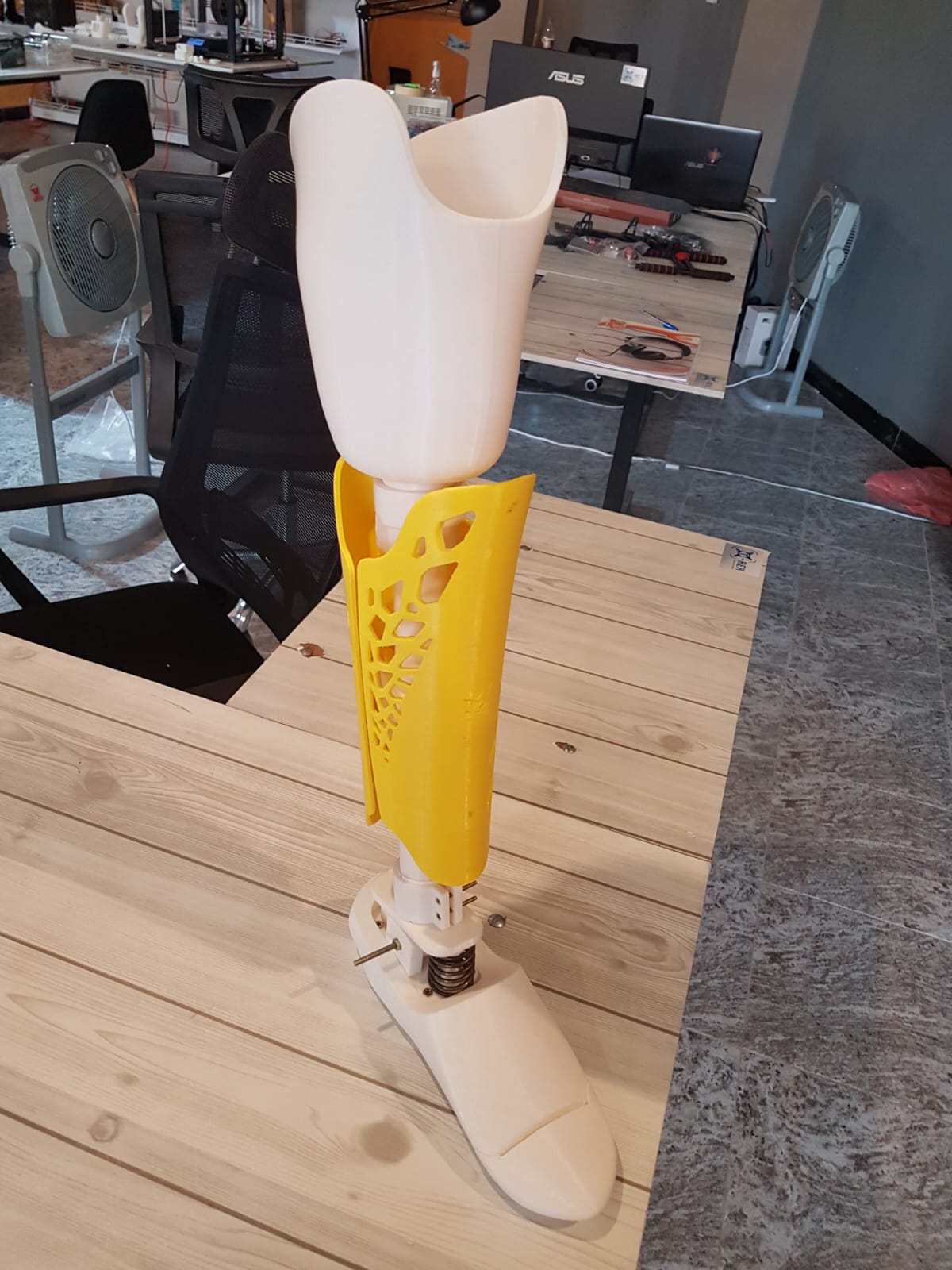
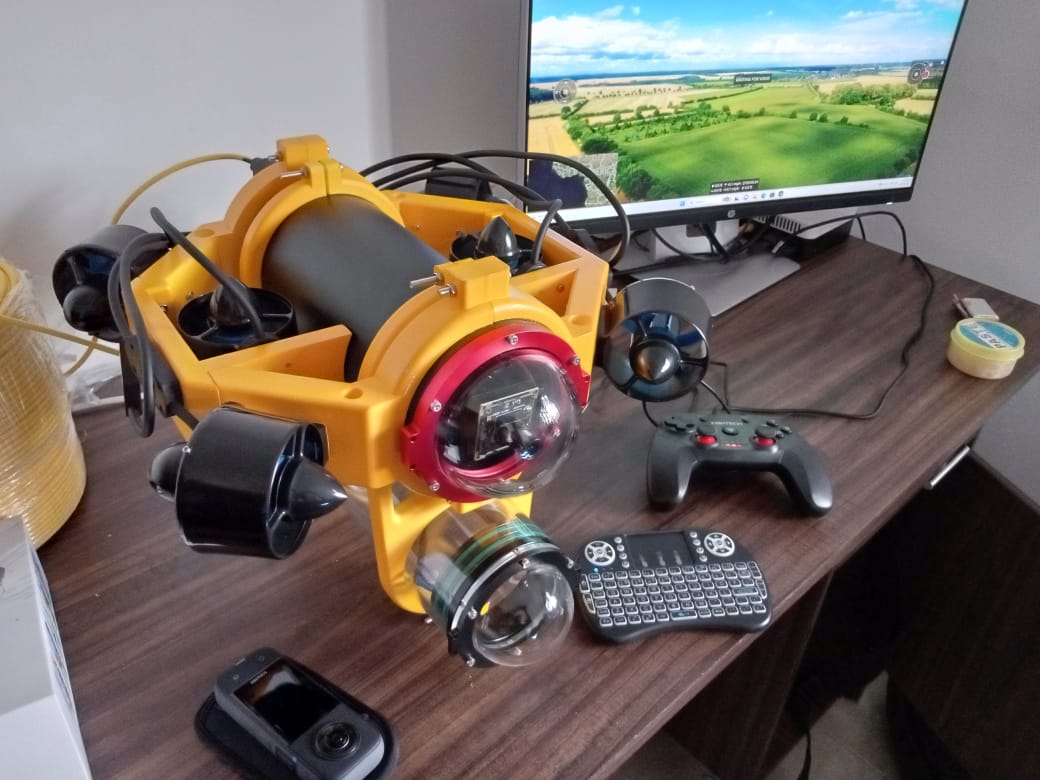
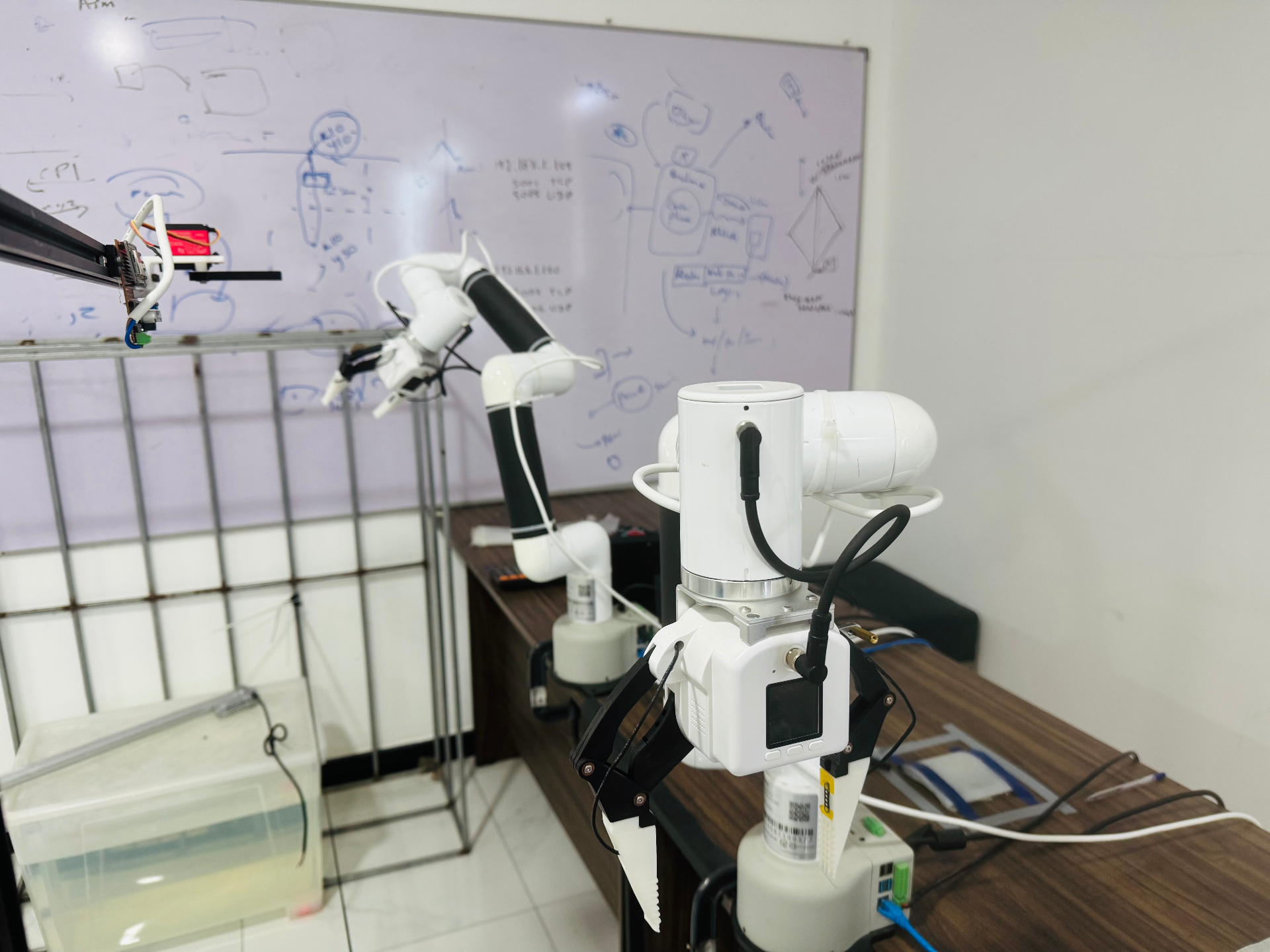
Client builds ship under NDA, so here's the studio work we can show: product concepts and EVT design studies across consumer, industrial, and IoT — how we think about architecture, manufacturability, and the details in between.
Studio concepts and EVT design studies, shown to demonstrate design and engineering approach — client deliverables remain confidential under NDA. Tap any tile for full resolution.
Who writes your report
Named engineers, not an anonymous inbox
Every Sprint report is written and signed by the engineering lead who would run your build — and reviewed by a second senior engineer before it reaches you.
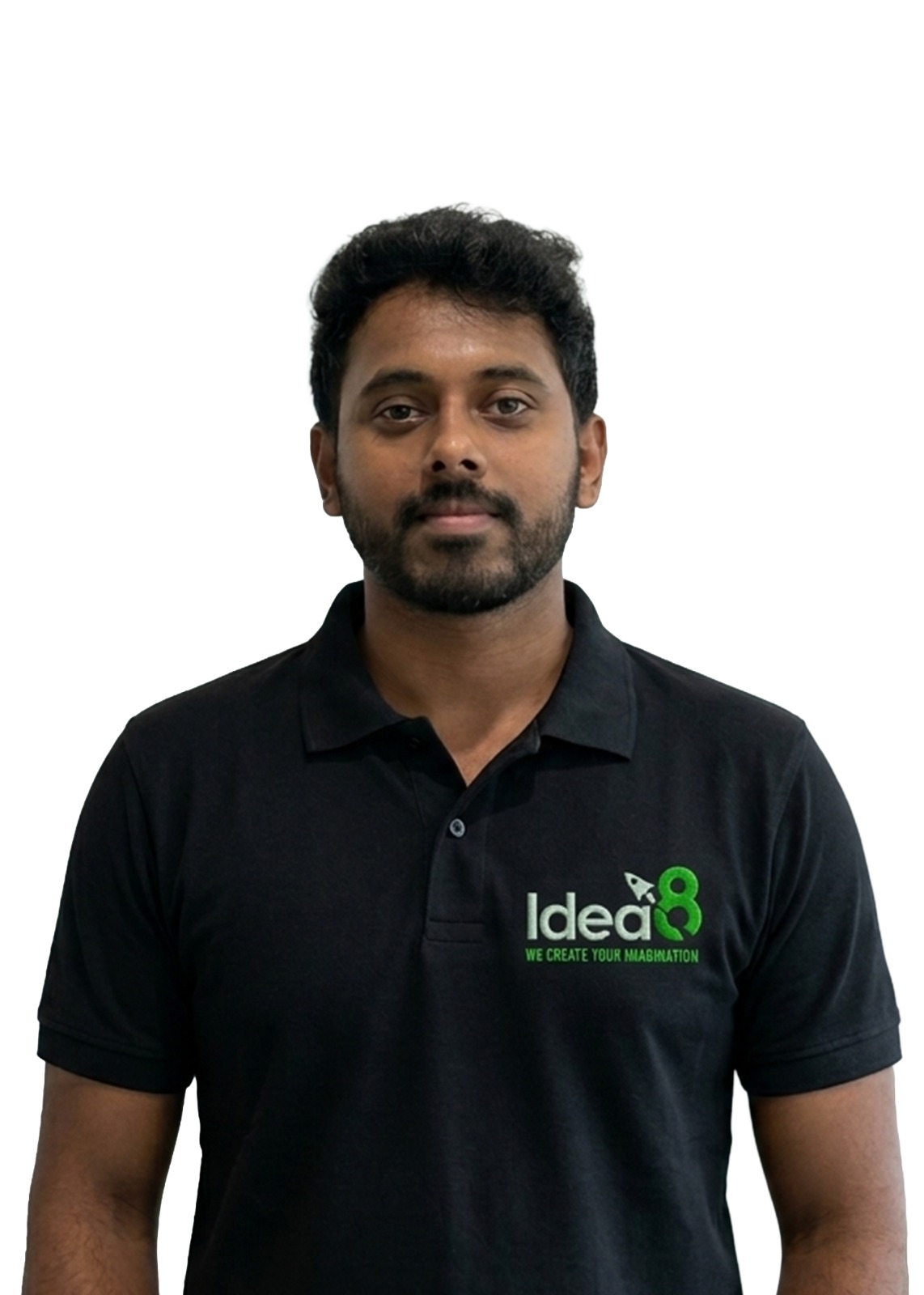
Our Team
The named engineers and operators who write your Sprint report, run your build, and stay on your project end-to-end.
NDA before we see anything. Every schematic, layout, firmware repo, and design file is yours — delivered continuously, not held hostage.
Overlap hours, weekly demos
Scheduled overlap with US and EU time zones, a weekly working demo, and a shared project tracker. You always know exactly where the build stands.
Senior engineers, full stack
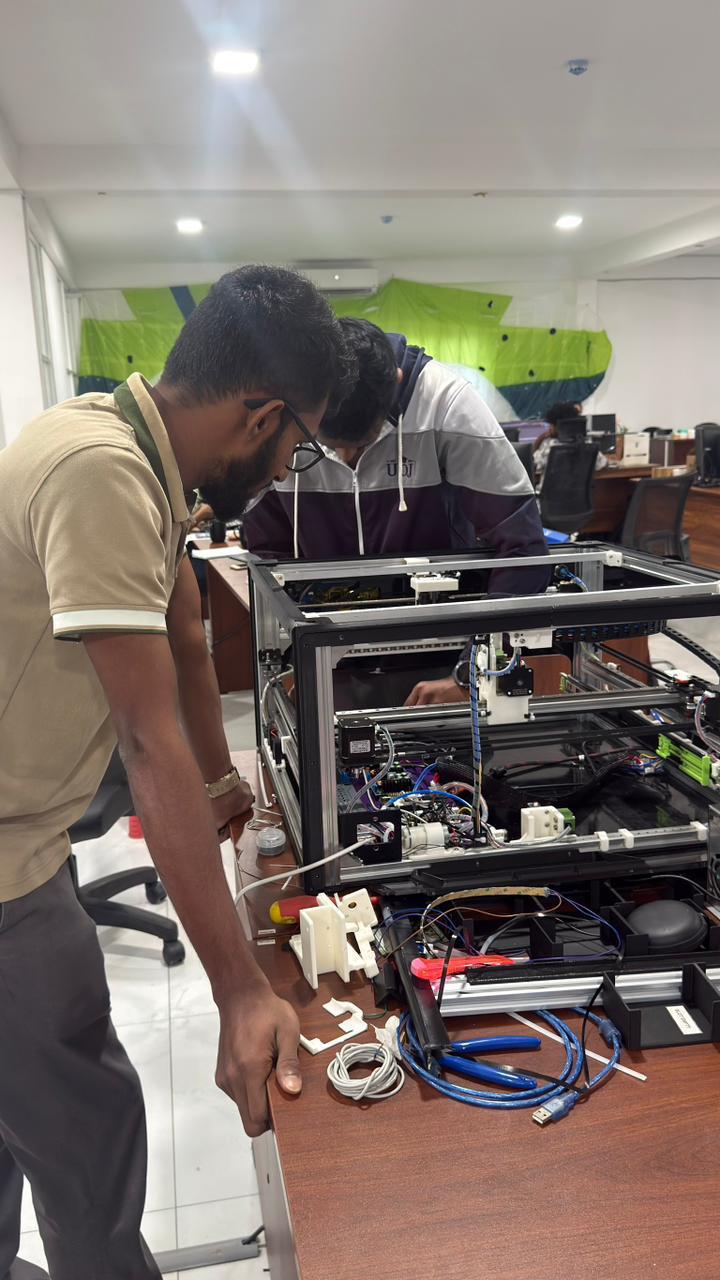
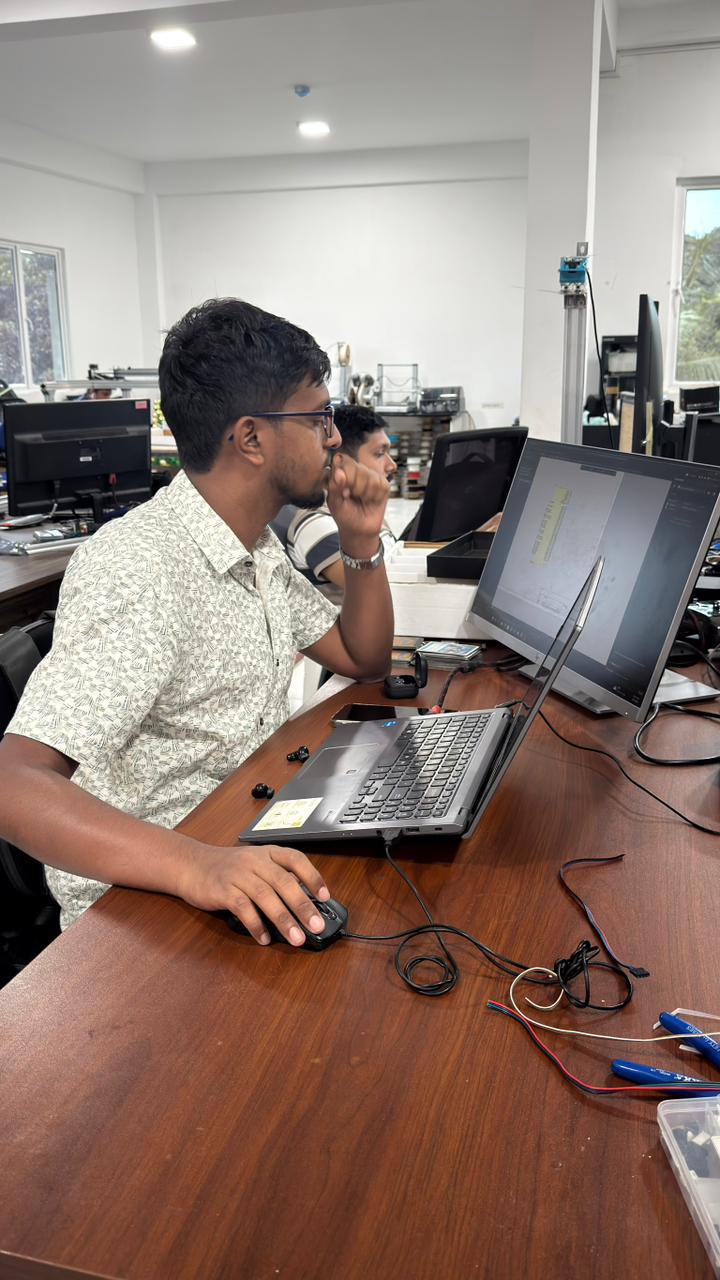
Electronics, firmware, AI/CV, mechanical, and app development under one roof — no subcontractor relay, no "that's another vendor's problem."
Questions founders actually ask
How accurate is the calculator?
It's an honest ±25% range based on the complexity profile you select, drawn from real project data. It will not capture what's unusual about your product — that's exactly what the Feasibility Sprint exists to pin down.
What happens after I buy the Sprint?
You get a kickoff scheduling link immediately. Kickoff is a 30-minute call to capture your concept and constraints; five business days later you receive the report and we book your 45-minute readout.
Do you sign NDAs?
Yes, before the kickoff call. Your idea, your IP, full stop. We're happy to use your paper or ours.
What if my idea isn't technically feasible?
Then the Sprint just saved you a five-figure mistake, and the report will say so plainly — with the closest viable alternative if one exists. We'd rather lose a project than build something that shouldn't be built.
Can you take over a half-finished project?
Frequently. The Sprint works as a technical audit of existing work: we assess what's salvageable, what isn't, and the realistic path to done.
Who owns the IP and design files?
You do — unambiguously. NDA before we see anything; schematics, layouts, firmware repos, CAD, and reports are delivered continuously during the work, not held until final payment. If we part ways mid-project, you keep everything produced to that point.
Can you invoice my company? What about VAT/tax?
Yes — Stripe issues a receipt instantly and we provide a formal company invoice on request (PO references welcome). We're a Sri Lankan entity providing cross-border services; tax treatment on your side depends on your jurisdiction, so route the invoice through your accountant as imported services.
Do you take software-only projects?
Yes, when it's product software — firmware, companion apps, dashboards, machine-vision pipelines, device cloud. We're not the right firm for marketing websites or generic IT work, and we'll say so on the fit call.
Is the report just AI-generated?
No. AI tools speed up research and drafting — the component selection, cost estimates, and risk calls are made and signed by the named engineering lead who would run your build, then reviewed by a second senior engineer. Download the sample report and judge the depth yourself; generic output doesn't contain power-budget math.
Stop guessing what your product costs to build.
Five days from now you can have the architecture, the budget, and the risks — in writing.